
You may be thinking:
"Is Rethink Drink Right For ME?"
"Is Rethink Drink Right For ME?"
Many people give everything they have to beat alcohol.
Effort isn’t the problem, the approach is.
When you match support to how the brain responds,
change becomes more predictable.
Many people give everything they have to beat alcohol.
Effort isn’t the problem, the approach is.
When you match support to how the brain responds,
change becomes more predictable.
You might not be ready for this yet if…
You Don't Feel Like Alcohol is Affecting Your Life
You're Seeing Meaningful Progress with an Abstinence-Based Approach
You're Unwilling to understand that there is no "one-size-fits-all"
You’re currently taking opioid pain medication (interaction risk)
You’re not ready to prioritise change right now
You Don't Feel Like Alcohol is Affecting Your Life
You're Seeing Meaningful Progress with an Abstinence-Based Approach
You're Unwilling to understand that there is no
"one-size-fits-all"
You’re currently taking opioid pain medication (interaction risk)
You’re not ready to prioritise change right now
This is a strong fit for you if…
You Feel Like You've tried everything else
You’d rather regain the 'off-switch', than quit cold-turkey
You're tired of the same internal conversations around drinking when cravings come up
Feel uncomfortable carrying a label around forever
You’re ready to explore options that meet you where you are
Real People. Real Voices. Real Success Stories.
Every voice you hear on this player was once exactly where you are now - facing the same struggle and looking for a logical way out.
These audio clips below aren’t actors or polished case studies. They’re real clients, partners, and families who chose to Rethink Drink and rewrote their story.
These are the real results of real Rethink Drink members.
While clinical studies show a high success rate for the Sinclair Method, individual journeys vary based on unique physiology and consistent adherence to the protocol. Our role is to provide the specialist coaching and evidence-based support designed to help you navigate that process safely and effectively.
When Alcohol Stops Being a Choice
When Alcohol Stops Being a Choice
There's a moment when drinking stops feeling optional.
You don't drink to celebrate. You drink to cope. To clean the house. To switch off. To get through the evening.
You tell yourself you'll cut back tomorrow. Then you find yourself drinking again, often more than you planned.
Not because you want to. Because something feels like it's driving the behaviour.
If that feels familiar, you're not broken. You're responding to something happening in the brain.
What Control Feels Like
What Control Feels Like
Control is not white knuckling through cravings. It's not forcing yourself to stop. And it's not misery disguised as discipline.
Real control feels quieter than that.
You stop chasing the next drink. You can leave alcohol in the fridge. You feel done, instead of desperate for more.
You still enjoy a drink. But it no longer hijacks the night. Or the next morning. Or the people around you.
That shift is what people notice first.
The Cost You're Already Paying
The Cost You're Already Paying
Over drinking rarely just costs alcohol.
It costs energy. Patience. Presence.
It shows up in the mornings. In how you speak to your partner. In how you show up for your kids. In how much of yourself work gets.
You might still be functioning. But functioning is not the same as living well.
The real question isn't "Is alcohol a problem?" It's "What is this quietly taking from me?"
This Isn't About Giving Everything Up
This Isn't About Giving Everything Up
Rethink Drink is not about quitting at all costs.
It's about restoring choice.
Some people eventually stop drinking. Others don't. Both outcomes are valid.
What matters is this: Alcohol stops being in charge.
You are no longer forced into extremes. Cold turkey or nothing. All or shame.
Just a calm, supported path back to control.
Frequently Asked Questions
Why haven't I heard of this before?
You’re not alone. Most people ask this. Here’s why.
It hasn’t been widely promoted
Naltrexone is a long-established, low-cost medication. Treatments without commercial backing rarely benefit from large-scale awareness campaigns or public education.
Abstinence has dominated the conversation
For decades, alcohol treatment has been led by abstinence-only models. Approaches focused on reducing drinking and restoring control have often sat outside the mainstream discussion.
Stigma keeps the topic quiet
Alcohol struggles are rarely talked about openly. That means progress stories tend to spread privately, through personal conversations rather than headlines.
Prescribing guidelines haven’t fully caught up yet
Although Naltrexone is approved and referenced in UK clinical guidance for alcohol dependence, prescribing guidelines were written before The Sinclair Method gained wider recognition. As a result, they focus on using the medication after detox to support abstinence, rather than the targeted, evidence-based approach used within TSM.
It doesn’t fit the usual recovery story
Medication-assisted treatment doesn’t come with a “rock bottom to hero” narrative.
There’s no battle to conquer, no lifelong identity to wear, and no public badge of suffering. For many people, that feels unfamiliar or even uncomfortable.
Alcohol Use Disorder is increasingly understood as a neurological condition. When a neurological condition is treated effectively, change can look quiet, gradual, and unremarkable from the outside. That doesn’t make it less valid. It just makes it different.
Culturally, we’re more used to celebrating struggle than progress. A method that reduces craving and restores control without a visible fight doesn’t always attract attention, even when it works.
The good news: awareness is growing
More people are sharing real experiences, social media is spreading the success, clinicians are paying attention, and evidence-led approaches are gaining visibility.
As evidence evolves, awareness follows.
For many people, this is the first time they’ve been shown a genuine alternative.
Can’t my GP just prescribe the medication?
You can certainly start with your GP, but most people find it’s another road to abstinence. Here’s why:
1. Licensing and Official Guidance
In the UK, naltrexone is licensed only to maintain complete abstinence, usually after detox. NHS prescribing protocols say the patient must already be alcohol-free before the first dose.
The Sinclair Method flips that script - you take naltrexone before drinking to retrain the brain... Because prescribing that way sits outside the guidelines, any GP who prescribes it is writing an off-label script, which is uncommon when alcohol is involved; as the consequences can be dangerous.
2. Moral and Clinical Dilemmas
For many clinicians, giving a medication while a person continues to drink feels like “enabling.”
Current NICE guidance even advises doctors to review treatment if drinking carries on. So when you explain the TSM approach (drink with the pill), some doctors simply won’t be comfortable.
3. Off-Label Rules and Governance
UK doctors can prescribe off-label, but only if they’re confident there’s strong evidence and proper monitoring.
Without a structured programme in place, most GPs feel they can’t tick that box, so they refer you to secondary-care alcohol services instead: a process that can involve assessments, waiting lists, and abstinence-based programmes before medication is discussed.
How Rethink Drink Bridges the Gap:
Private addiction specialists: we work with doctors who fully understand (and were even involved in the research studies of) The Sinclair Method, and have the clinical expertise to prescribe naltrexone off-label when clinically appropriate.
Built-in support: coaching, drink-tracking, and a ring-fenced community which satisfy medical governance for follow-up and monitoring.
Fast access: appointments within days and next-day delivery of medication, rather than months of waiting.
You’re welcome to take the NHS route, and we can give you research papers to share with your GP.
But if you want a quicker path - with doctors who understand The Sinclair Method and a full support system wrapped around you - we’re here to make that happen.
How long will it take?
Everyone's brain, drinking history and current drinking habits are different, so there’s no single clock we can set.
Still, evidence, coaches and members experience give us a helpful roadmap:
• First 1–4 weeks: cravings often soften, heavy-drinking episodes shrink, the first early wins appear.
• Around 3–6 months: with consistency, urges drop, intake is typically 50–70 % lower, and alcohol-free days often begin to outnumber drinking days.
• 6–12 months: many reach “pharmacological extinction”: the brain has largely unlearned its old reward loop, and drinking becomes a choice, not a compulsion.
• 12 months and beyond: some people need a longer runway depending on life stressors, trauma work, or deeply-ingrained habits. Progress can pause, zig-zag, then surge forward again... And that’s perfectly normal.
What speeds up, or slows, the process?
100 % compliance: following the protocol every single time you drink.
Habit change & coaching: identifying triggers, questioning habits, stacking new routines, using the Drink Tracker.
Accurate logging: “data over drama” lets us fine-tune dosage or habits quickly if things aren't going to plan, or you plateau.
External pressures & coping load: grief, health issues, career upheaval, or caregiving can pull the alcohol-as-coping lever harder.
When that happens, progress may stall or zig-zag; we simply adjust the plan and keep moving.
Why are the first 3 months so important?
The first 90 days matter because they establish whether this approach is working for you, and whether it is safe and appropriate to continue.
This initial period gives our prescribing doctors confidence that you’re supported with proper monitoring, guidance, and coaching while you learn the protocol. That matters, because this is medical treatment, not a self-help experiment.
It also allows time to build the fundamentals that make long-term success possible.
Those first three months are where you establish:
• consistent medication use
• accurate tracking and awareness
• early habit and environment changes
Without these in place, progress can become unreliable and frustrating.
Just as importantly, the first 90 days allow us to assess how your body and behaviour are responding. If the process is not working as it should, we want to know that early. That way we can adjust, offer additional support, or, if needed, help you decide whether The Sinclair Method is the right fit for you at all.
That early clarity is safer for you and more responsible for everyone involved.
We work on a solid foundation so you don’t have to rely on willpower or guesswork later.
Will it work for me?
For the majority of people, when the protocol is followed and support is used properly, meaningful change begins within weeks, with solid, lasting control typically developing over 6 to 12 months.
Sometimes sooner. Sometimes later.
That timeline flexes with real life. Stress, habits, environment, and consistency all play a role. But the direction of travel stays the same.
This approach works because it targets the neurological driver of over-drinking, not just the behaviour. When alcohol stops delivering the same reward, drinking naturally begins to reduce. That reduction is then supported and stabilised through coaching, habit change, and awareness.
What matters most is compliance and engagement:
- Taking the medication as prescribed.
- Tracking honestly.
- Leaning on support when things feel messy or unclear.
This isn’t about permission to drink. It’s about changing the relationship with alcohol, in a structured, supported reduction process, designed to help you regain control safely and sustainably.
Our role is to guide those changes, help you navigate setbacks, and make sure the process is working as it should. If it is not, we address that early and responsibly.
The destination is not abstinence by force.
It is freedom, choice, and control on your terms.
More Questions?
See our FAQ Page for more information
"For years I tried to out-run my drinking."
"Rehab, 12-step, sheer will-power - I did the lot.
Six months bone-dry and I still felt wired with anxiety.
Then a forward-thinking psychiatrist introduced me to The Sinclair Method.
Light-bulb moment: the problem wasn’t moral weakness, it was biological.
Thankfully science had the answer.
One tablet before a drink dialled cravings down so I could rebuild life instead of fighting urges.
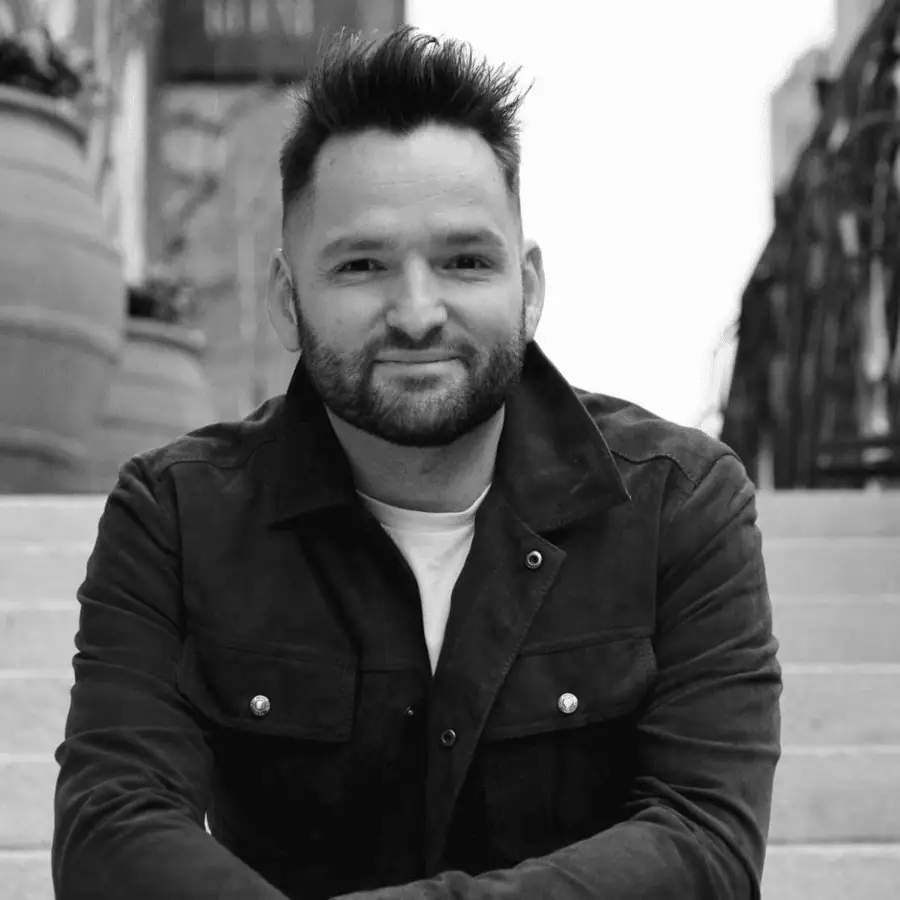
Steve Roe,
2x Award-winning TSM Coach
Today I’m proof change sticks. As a TSM Coach & Clinical Hypnotherapist at Rethink Drink I blend medication know-how, habit coaching, and hypnosis to spark your own light-bulb moments.
Whether you want to drink less or quit completely, I’ll listen, guide, and hand you practical tools to make alcohol small - and your life big."
As seen in:


Why Choose Rethink Drink?
The Sinclair Method is a medical treatment protocol developed through academic research and scientific study,
and openly published in the public domain for clinical use worldwide.
Its name, the "Sinclair Method" is simply the accessible term given to 'pharmacological extinction treatment',
named after researcher John David Sinclair who developed the approach through his research.
The science behind it has been studied and refined for decades, and its core principle...
Retraining the brain’s learned reward response to alcohol - is well established.
The Sinclair Method isn’t new.
What has been missing is how it’s delivered in the real world, and how it’s brought into the mainstream.
The method is established.
The question is how it’s applied.
That’s where Rethink Drink comes in
In a laboratory, a method can work under controlled conditions.
But out here, life happens.
Deadlines.
Kids.
Stress.
Poor sleep.
Relationship strains.
Low motivation.
We bring the Sinclair Method into the real world with:
• Structured coaching that helps you apply the method through everyday challenges
• Accountability and questions that deepen understanding, not just compliance
• Medical guidance woven into a practical support framework
• Shaped by lived experience from people who’ve walked the same path
We don’t separate the science from the support.
The Sinclair Method is the foundation.
How it’s applied determines whether it stays on paper or changes lives.
Rethink Drink exists to apply it properly, in real life, with structure and support.
And if you choose Rethink Drink, you’re not just following a protocol.
You’re part of a shift in how alcohol use is understood, treated, and talked about.
How Can We Help?
Everyone starts in a different place.
What matters is taking the next step that fits you.

Want to Know More?
Discover The Sinclair Method in our free mini-course. Start today.

Need to talk it through?
Book a no-obligation discovery call.
Get your questions answered.

Ready For Change?
Start your transformation.
Control is the goal.
Copyright Rethink Drink Ltd 2023-2026 | Company Registration Number 14619896
The Sinclair Method in the UK | Privacy Policy | FAQ | Free UK Alcohol Units Calculator | What is the Sinclair Method? | Login
Registered Partner Pharmacy: Porter Pharmacy Braehead, GPHC Registration Number- 9011388 | Andy Porter, MRPharmS Superintendent Pharmacist