Why Do I Drink Every Night? What Your Brain Is Actually Telling You
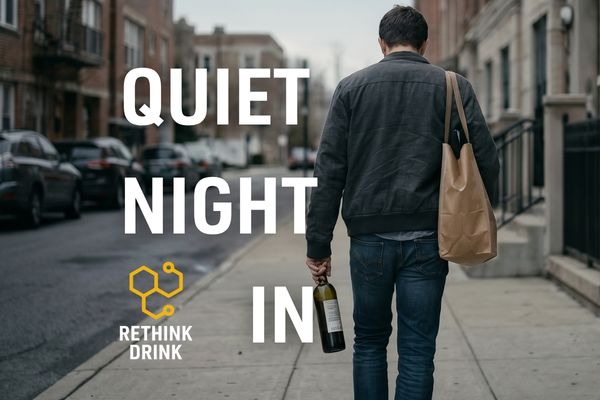
You don't think of yourself as someone with a drinking problem.
You're functioning. You hold down a job. You're not drinking in the morning or hiding bottles.
But every evening, around the same time, the thought arrives. And most nights, you go with it.
If that sounds familiar, this article is for you...
Grey area drinking describes a pattern where alcohol has become habitual, increasingly automatic, or difficult to moderate, yet doesn't match the stereotypes of addiction. It sits between occasional drinker and dependent drinker. Most people in this space are highly functional, but quietly aware that something doesn't feel quite right.
Is drinking every night actually a problem?
The question most people ask is: "Am I drinking too much?"
That's not quite the right question.
The more useful one is: "Could I easily not drink tonight?"
If the answer is yes, with no real pull or discomfort, that's one picture. If the answer is "technically yes, but I'd feel irritable, restless or like I was missing something", that's a different picture entirely.
This isn't about units. The NHS recommends no more than 14 units a week, and that's a useful marker. But it doesn't tell you much about compulsion. A person can drink below the recommended limit and still feel quietly driven to do it every single evening. Another person can drink more and feel no pull whatsoever.
The question isn't how much. It's what's happening in your brain when you reach for it.
Why the urge tends to hit at the same time each day
At the same time every evening, when you sit down after work, after dinner, or once the kids are in bed, something shifts. The thought arrives. Sometimes it's a craving. Sometimes it's just automatic. You're reaching for a glass before you've consciously decided to.
This is not a personality trait. It's a conditioned neurological loop.
Here's what's happening.
Alcohol triggers the release of endorphins, the brain's natural feel-good signals. Over time, the brain begins to associate specific cues with that endorphin release: the time of day, the sofa, the end of work, the kitchen. Eventually, the cue alone starts triggering the urge, before a single drink has been consumed.
Dopamine, the brain's anticipation and motivation signal, drives you towards the reward. Endorphins deliver the relief. And over repeated cycles, this loop becomes deeply embedded.
The brain isn't malfunctioning. It's doing exactly what brains do: learning patterns, automating behaviour and seeking efficiency.
The problem is that it learned the wrong shortcut.
The difference between a habit and a dependency, and why the line is blurrier than people think
A habit is a learned behaviour. So is dependency. The difference is mostly in how strongly the pattern is embedded, and what it costs you to try to break it.
Someone with a strong habit might feel mildly irritable or restless if their usual evening drink doesn't happen. Someone with a physical dependency might feel anxious, shaky or genuinely unwell.
Most daily drinkers sit somewhere on that spectrum. Not dramatically dependent, but not freely choosing either.
The important thing to understand is this: the further along that spectrum you are, the harder willpower alone becomes. Not because you're weak. Because the brain has literally reorganised around the pattern.
What grey area drinking actually looks like
This is the profile most people recognise, but that nobody names.
If you drink every night, there's a good chance you recognise most of this.
You drink most evenings, but rarely get visibly drunk
You've thought about cutting back, and sometimes have, but always drift back
You use alcohol to decompress, wind down, or mark the end of the day
You feel slightly irritable or unsettled on nights when you don't drink
You don't identify with the word "alcoholic", and you're probably right not to
You're functioning, but quietly aware something isn't quite adding up
This profile is incredibly common. It just doesn't have a name that most people find themselves in. Grey area drinking is probably the most accurate one.
You can find out whether Rethink Drink is right for you if any of this sounds familiar.
Why cutting down with willpower rarely works long-term
If you've tried to cut back and found yourself back where you started, that's not a character flaw. It's neuroscience.
Willpower is a conscious effort. The drinking pattern is largely unconscious. The cue fires, the urge arrives, and the brain is already two steps ahead before you've decided anything.
Awareness doesn't change behaviour. Not alone. Not long-term.
That's why people can understand every reason to drink less and still find themselves reaching for a glass at 7pm. Sleep, mood, health, energy, relationships. The knowing doesn't touch the learned loop.
This is worth sitting with.
It means the failure to moderate through effort alone isn't evidence that you're too weak or too far gone. It's evidence that the pattern is running on a deeper track than willpower can reach.
What changes the pattern at the neurological level
The most evidence-based way to change this kind of pattern isn't discipline. It's pharmacological extinction.
The Sinclair Method uses naltrexone, a prescription medication taken before drinking. Naltrexone blocks the opioid receptors that alcohol normally activates. When those receptors are blocked, the endorphin release that reinforces the behaviour is significantly reduced.
Over time, repeated consistently, the brain begins to unlearn the alcohol-reward connection. The urge diminishes. The pattern weakens. Not through white-knuckling it. Because the neurological reinforcement that built the pattern in the first place is no longer happening.
This is not a quick fix. It's a process, and it takes time. But for many people, it's the first approach that actually addresses the mechanism rather than just asking them to override it through effort.
Naltrexone is prescription-only and must be assessed and issued by a qualified doctor. It isn't suitable for everyone, and proper medical oversight matters.
What to do if this sounds familiar
If you've read this and recognised yourself, that's a useful starting point. Not a reason to panic. Not a label to carry. Just information.
The pattern you're in makes complete neurological sense. And it's one that can change.
The next step isn't committing to anything dramatic. It's simply finding out whether there's a more effective approach available to you.
You can read what others have said about going through this process. Or, if you'd like to talk through whether this approach could work for your situation, you can book a discovery call.
Control is possible. The pattern isn't permanent. And you don't have to figure this out alone.
Frequently asked questions
Is drinking every night classed as alcohol dependence?
Not automatically. Daily drinking exists on a spectrum. Some people who drink every evening are physically dependent; many are not. The more relevant question is whether the drinking feels compulsive or difficult to stop, rather than just frequent.
Can I change this pattern without stopping drinking completely?
For many people, yes. The Sinclair Method is designed to reduce the neurological reinforcement of drinking over time, which can lead to significantly reduced consumption, moderation, or abstinence depending on the individual. The goal is restored choice, not necessarily a complete stop.
What is The Sinclair Method and how does it work?
The Sinclair Method uses naltrexone, a prescription medication taken before drinking. It blocks the opioid receptors that alcohol stimulates, reducing the reinforcement effect. Over time, this process of pharmacological extinction can significantly weaken the learned alcohol-reward connection in the brain. You can learn more on our Sinclair Method overview page.
How do I access naltrexone in the UK?
Naltrexone is prescription-only in the UK and must be issued by a qualified doctor. NHS access exists in some alcohol treatment pathways, though availability varies. Rethink Drink works with a private doctor who understands the Sinclair Method and can assess suitability properly.
What is grey area drinking?
Grey area drinking describes a pattern where alcohol use has become habitual or difficult to moderate, but doesn't match the stereotypes of addiction. Most grey area drinkers are functional and high-performing, but quietly aware that their relationship with alcohol isn't quite right.